Hygiene
Transforming dense hygiene reference material into a searchable LMS glossary for passenger shipping training.
Interactive E-learning
Digitalisation

About project
This project shows how traditional maritime hygiene reference material can be redesigned into a more usable digital learning asset.
The source material was a dense hygiene booklet covering microorganisms, bacteria, viruses, parasites, food safety, hygiene risks, cleaning, kitchen hygiene, water supply, and pest control. The content was technically useful, but it was presented in a long-form format that made it difficult for learners to scan, revisit, or use quickly during training.
The goal was to turn this static reference material into an interactive, searchable glossary inside a digital hygiene training module for passenger shipping learners.
Challenge
The original booklet contained important hygiene knowledge, but the format created several learning barriers.
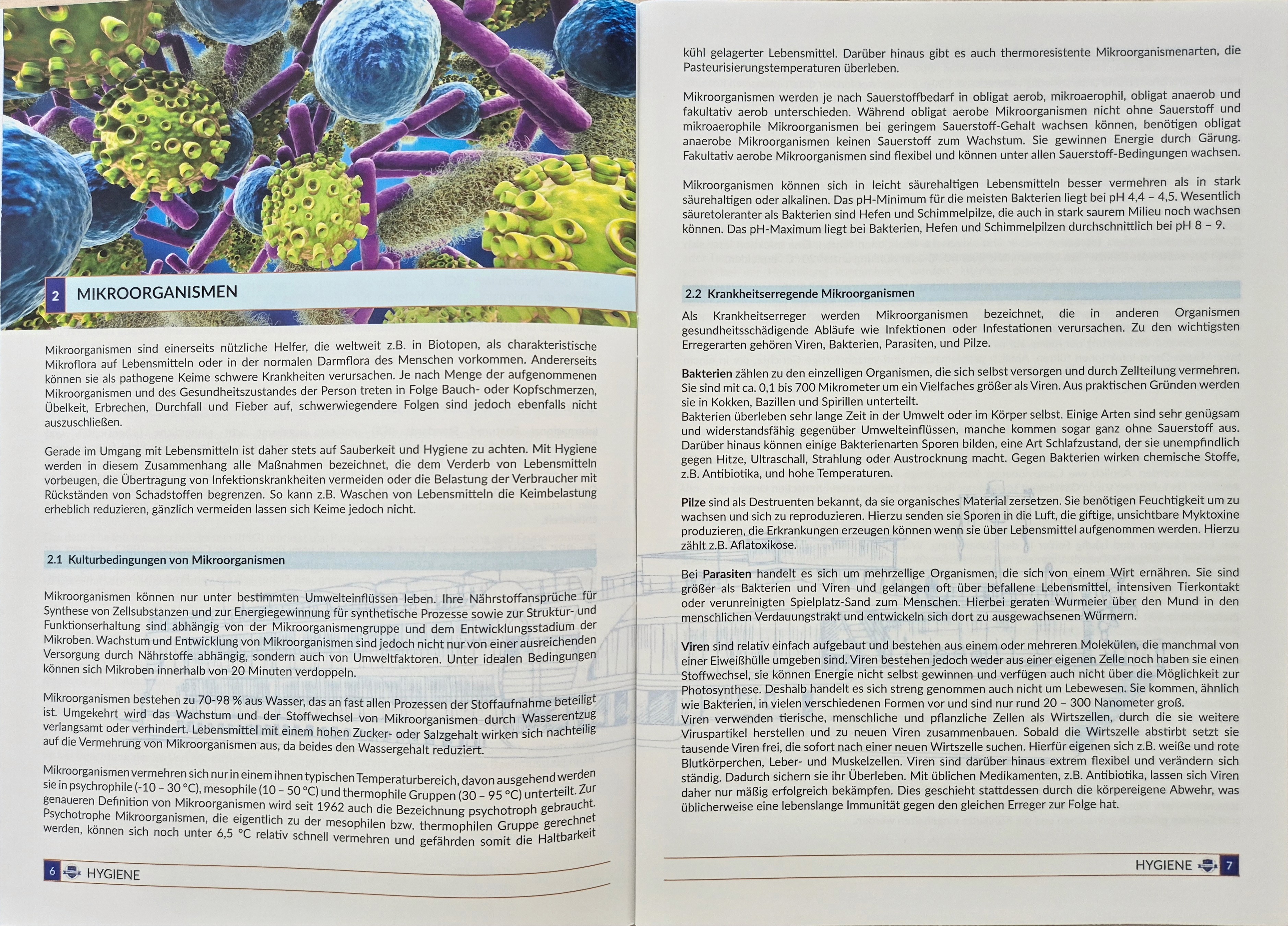
Key information was hidden inside long paragraphs, with limited visual hierarchy and little support for quick lookup. This made the content harder to use as practical learner support, especially for international learners working in English as a second language.
The challenge was not simply to make the material look more modern. The real task was to reorganise the information so learners could find, understand, and revisit key hygiene topics more easily inside the LMS.
This also involved adapting German source material into clear English learning content.
Process
Instead of recreating the booklet as another long online page, the content was restructured into a topic-based glossary.
The original material was reviewed and broken down into clear learner-facing categories such as bacteria, viruses, basic hygiene on board, kitchen hygiene, water supply, pest control, waste reduction, and common hygiene risks.
Long technical explanations were reduced into shorter, clearer entries. Visual cards were added to support faster understanding, while the interface was designed around simple navigation, search-style interaction, and consistent screen structure.
The focus was on creating a reference tool learners could use during the course, rather than a static document they had to read from beginning to end.
Result
The final output was an interactive hygiene glossary embedded directly into the digital training module.
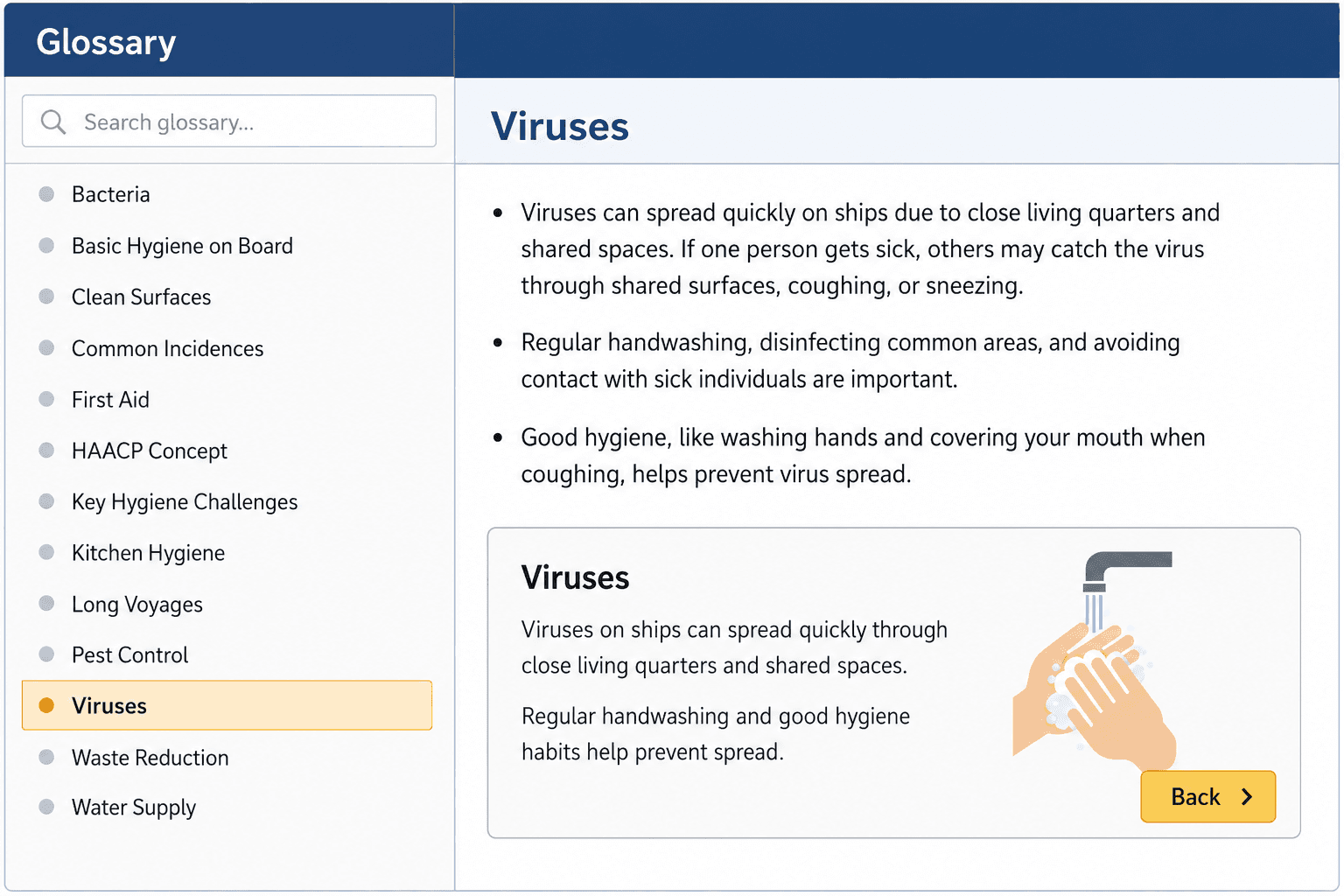
Learners could search or browse key hygiene topics, read concise explanations, and use visual summaries to support understanding. For example, the topic “Viruses” was transformed from a technical paragraph into a short visual learning card explaining how viruses can spread on ships and how regular handwashing and hygiene habits help reduce risk.
This made the content easier to scan, easier to remember, and more useful as part of a wider passenger shipping training experience.
What this demonstrates
Content digitalisation
Instructional design
Glossary and knowledge-base design
Technical content simplification
Visual hierarchy
LMS course enhancement
German-to-English content adaptation
Non-native speaker support
Project shots