River Cruises & Environmental Impact
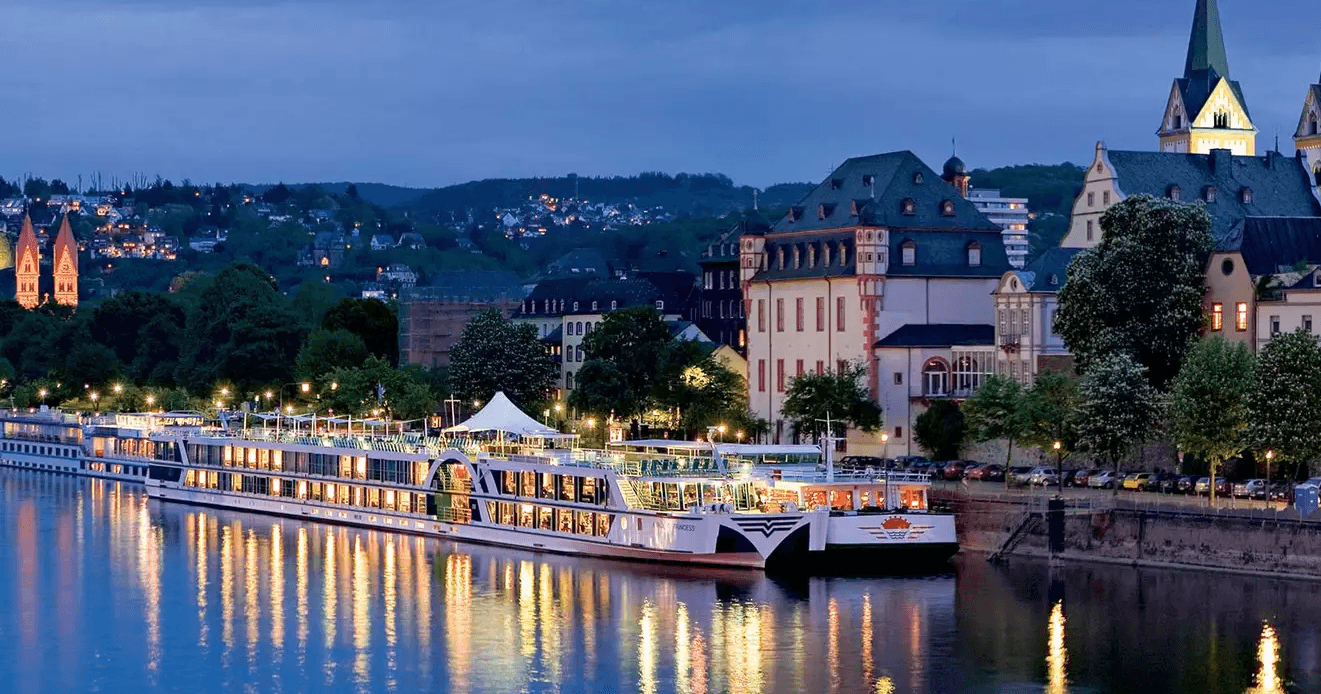
A modelled analysis of resource consumption and operational emissions on a 180-passenger river cruise ship, built from hotel, hospitality, cruise, and maritime energy sources where Rhine-specific river cruise data was unavailable.
Nautical Research
About project
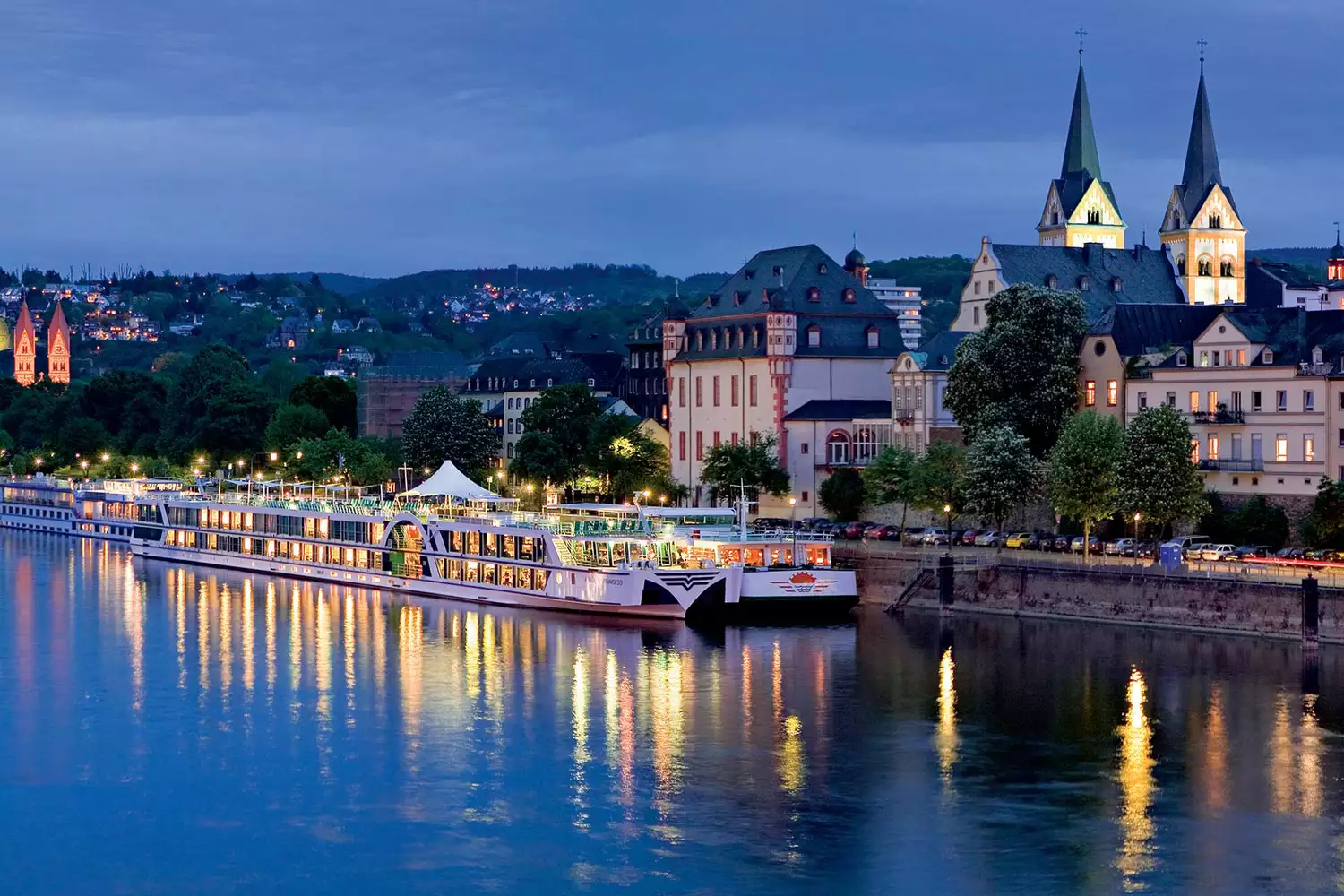
This project modelled the environmental impact of a small river cruise vessel operating on the Rhine.
The aim was to understand how a 180-passenger river cruise ship consumes resources across food and beverage, lodging, water, waste, linen, electricity, crew operations, and propulsion.
Direct river-cruise-specific sustainability data was limited, so the project used adjacent evidence from hotels, hospitality, cruise operations, food waste research, and maritime energy studies to build a practical baseline model.
The result was not intended to be a perfect carbon footprint. It was designed as a structured decision-making framework that made the main environmental pressure points visible.
Challenge
River cruise ships sit between several industries at once.
They are partly hotels, partly restaurants, partly transport systems, and partly closed maritime environments. A vessel may include guest cabins, restaurants, kitchens, bars, crew accommodation, laundry processes, waste systems, technical infrastructure, generators, and propulsion systems.
This makes their environmental impact difficult to assess using one type of benchmark.
Hotel data can help explain guest behaviour, water use, linen, and lodging-related consumption. Restaurant and hospitality research can help estimate food waste and kitchen operations. Maritime studies can help explain fuel use, propulsion, and onboard electricity demand.
However, none of these sources fully describe a smaller river cruise ship operating as a floating hotel on an inland waterway.
The challenge was therefore to create a reasoned estimate where no directly usable dataset existed.
Process
I built an approximate model using adjacent but relevant data sources.
The model was based on:
a 180-passenger river cruise vessel
50 crew members
85% occupancy
hotel sustainability benchmarks
hospitality and food waste research
cruise ship energy studies
maritime operational reports
I separated the ship into its main resource systems rather than treating it as one single emissions source.
The key categories were:
food and beverage
lodging and guest accommodation
water consumption
waste streams
linen and laundry
crew operations
onboard electricity
propulsion and fuel use
This made it possible to compare guest-facing behaviours with wider operational systems.
The process:
1. Defined the model case
The first step was to create a realistic operating scenario.
Instead of modelling an abstract cruise ship, I used a specific case: a 180-passenger river cruise ship with 50 crew members and 85% occupancy.
This created a consistent basis for estimating resource use and comparing different parts of the operation.
2. Mapped the ship as a connected system
I treated the vessel as a floating hospitality system.
This meant looking beyond guest behaviour and mapping the ship as a network of connected resource flows: food, water, energy, waste, linen, crew support, and propulsion.
This helped show that sustainability is not only about passengers taking shorter showers or using fewer towels. It is also shaped by menu planning, provisioning, fuel type, generators, waste handling, supplier logistics, and service expectations.
3. Built estimates from adjacent sources
Because direct river-cruise data was limited, I used comparable evidence from nearby sectors.
Hotel benchmarks were used to estimate lodging-related consumption, water use, guest behaviour, and linen demand.
Hospitality and food waste research helped frame kitchen operations, buffet service, purchasing accuracy, and overproduction.
Cruise ship and maritime energy studies helped explain the relationship between propulsion, onboard electricity, generators, and hotel-load demand.
The purpose was not to claim exact precision. It was to create a reasoned baseline from the best available evidence.
4. Separated passenger and crew consumption
A key modelling decision was to avoid treating everyone on board as the same type of user.
Passengers behave like hotel guests. They are in a leisure environment and may use more water, towels, food variety, electricity, and services.
Crew members live and work on the vessel under more functional conditions. Their consumption is shaped by work routines, shared accommodation, and operational needs.
The model therefore separated passenger and crew consumption rather than multiplying one average figure across everyone on board.
5. Identified the main impact areas
The analysis identified several areas where environmental pressure is likely to concentrate.
Food and beverage creates impact through food production, kitchen energy, water use, supply logistics, and waste. Meat and fish were especially important because even small levels of waste in high-emission categories can have a disproportionate effect.
Water use is spread across showers, toilets, cleaning, dishwashing, kitchen use, laundry, and crew needs. On a ship, water consumption also creates waste-management issues because grey water, black water, food waste, wastewater, and solid waste must all be handled carefully.
Electricity is more complex than in a normal hotel because onboard demand interacts with generators, propulsion, docking conditions, and shore power availability.
Linen is easy to overlook, but bedding and towel provision creates impact through washing, drying, transport, replacement frequency, and outsourced supplier logistics.
Result
Key finding
The central finding was that river cruise sustainability is an operational design problem.
Guest behaviour matters, but it is only one part of the picture.
The larger environmental pressures are shaped by how the ship is powered, supplied, cleaned, stocked, staffed, and operated.
Food waste is not only about guests leaving food on plates. It is connected to buffet design, purchasing accuracy, storage, kitchen routines, menu planning, and luxury service expectations.
Linen impact is not only about washing towels. It is connected to service standards, supplier logistics, replacement cycles, and outsourcing.
Electricity use is not only about cabin behaviour. It is connected to generators, propulsion, shore power, docking conditions, and technical energy management. This means meaningful sustainability improvements need to combine behavioural changes with operational redesign.
Overall
The project produced a structured sustainability model for a 180-passenger river cruise ship.
It created a practical baseline for understanding where environmental impact is likely to sit across the vessel’s operating model.
The model helped turn an unclear sustainability question into a clearer set of operational categories:
where guest behaviour contributes to impact
where operational systems create larger pressures
where better data would be needed
where sustainability interventions could be targeted
how hotel, restaurant, and maritime data can be combined carefully
The final output was a framework that could support future sustainability training, internal reporting, supplier discussions, or more detailed environmental analysis.
What this project demonstrates
This project shows my ability to take a complex, under-defined problem and turn it into a structured model.
It demonstrates research, systems thinking, environmental analysis, hospitality operations awareness, and the ability to work with incomplete data without overclaiming certainty.
It also shows how I approach digital learning and operational content: by breaking complex systems into clear, explainable parts that can be used for training, communication, and decision-making.
Project shots