Safety Training
From a maritime handbook to certified, digitalised Basic Safety Training: Transforming traditional safety reference material into certified multilingual e-learning for inland shipping crews.
Interactive E-learning
Digitalisation

About project
This project shows the transformation of traditional maritime safety reference material into interactive digital learning for inland shipping crews.
The starting point was Handbuch See, a German occupational safety and health handbook for seafaring and fisheries. The handbook contained valuable technical safety guidance, but it was designed primarily as reference material rather than as an active training experience.
The goal was to convert dense maritime safety content into a structured Basic Safety course that could support international learners, practical training, digital assessment, and certification through the LMS.
Challenge
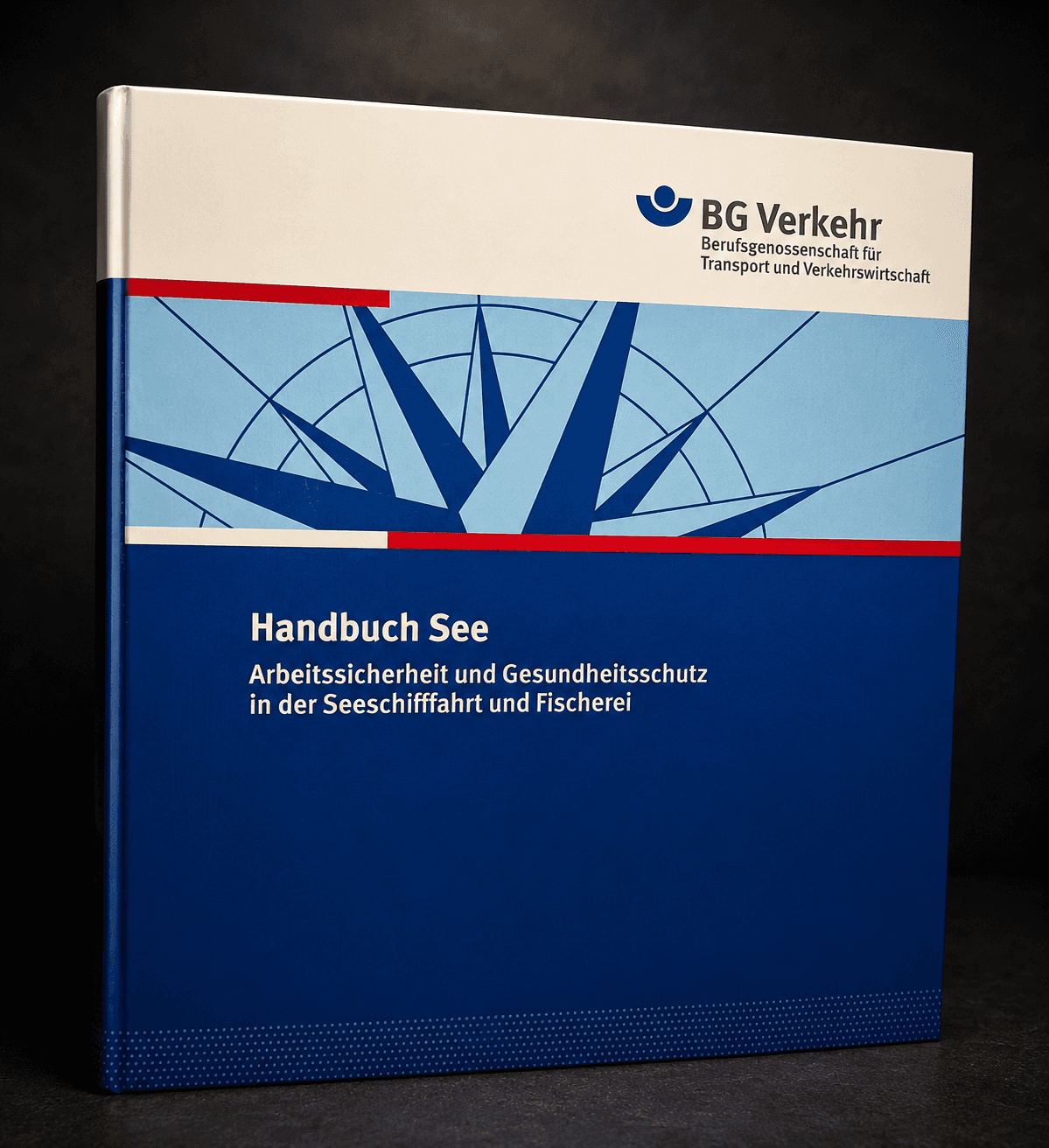
The source material was detailed, technical, and written for a German maritime context. To make it suitable for inland shipping training, the content needed to be analysed, simplified, adapted, translated, and rebuilt into a format learners could actively engage with.
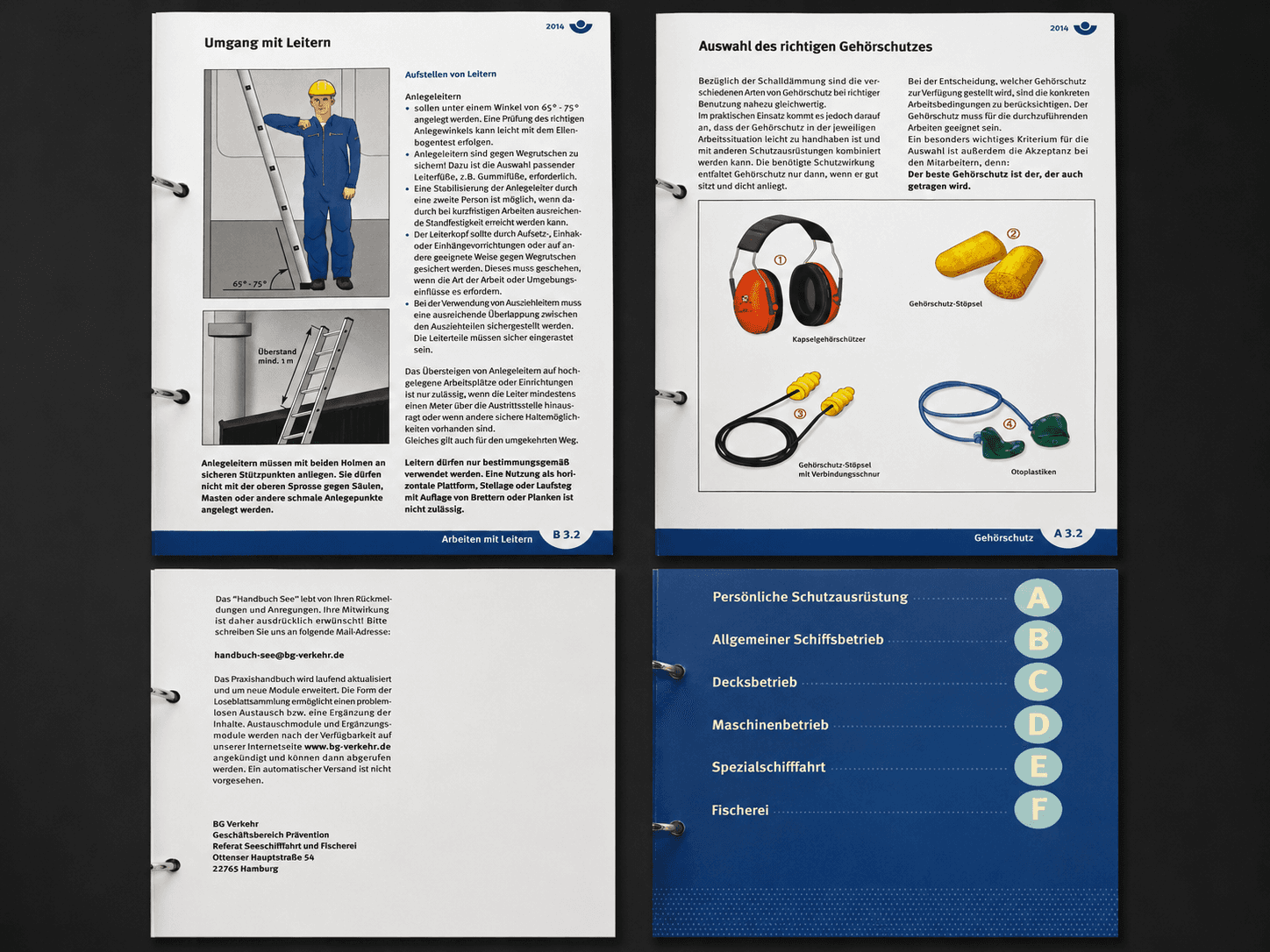
This involved more than transferring information from paper to screen. The challenge was to preserve safety accuracy while creating learning that was clearer, more visual, easier to apply, and suitable for international crews.
The course also needed to support multilingual production, LMS delivery, practical training, and certification requirements.
Process
The handbook content was broken down into smaller learning moments rather than copied directly into slides.
Technical safety topics were reviewed, simplified, and rebuilt into structured course screens. Long reference passages were converted into clearer explanations, visual examples, interactive activities, and assessment-ready practice.
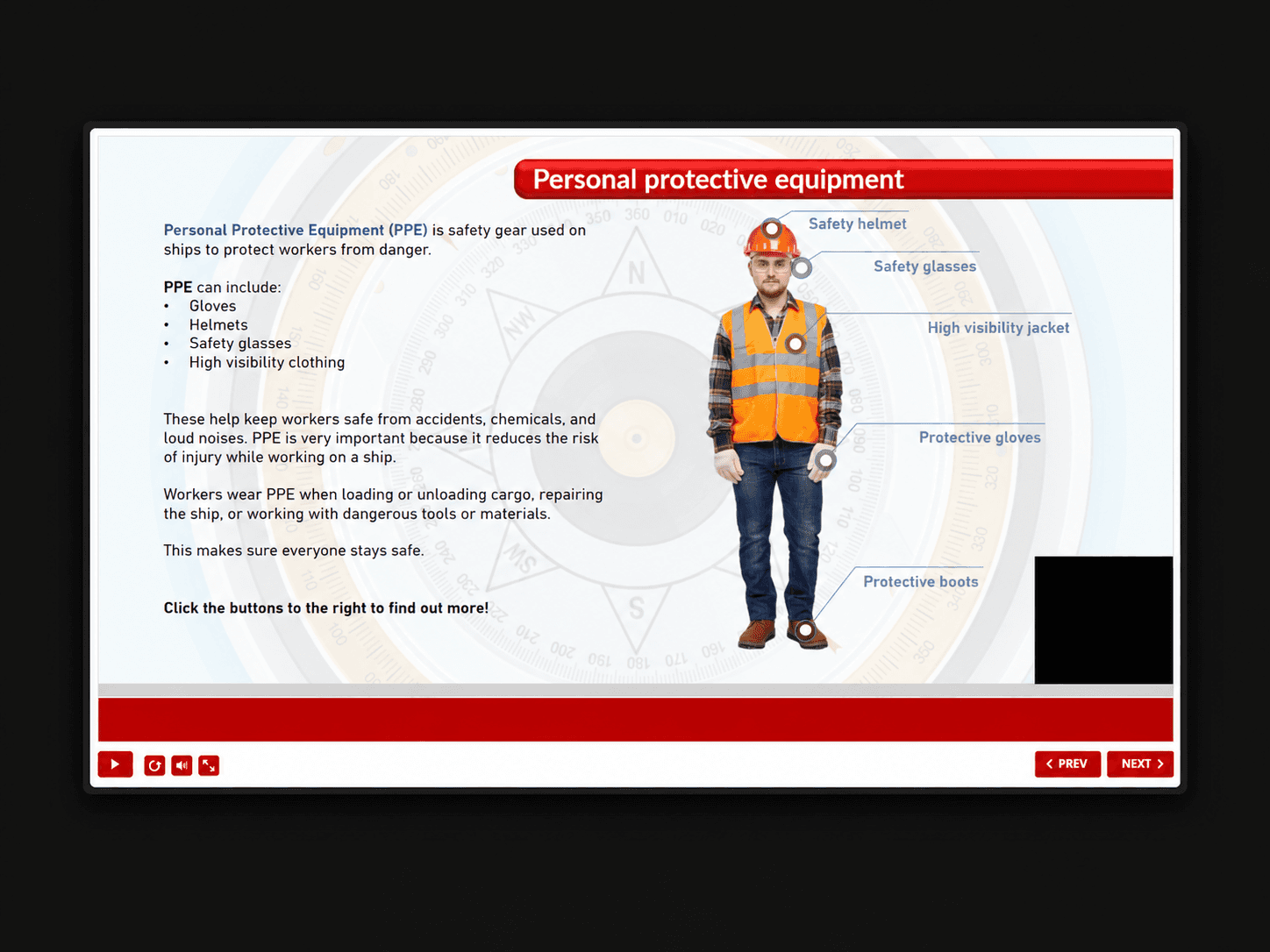
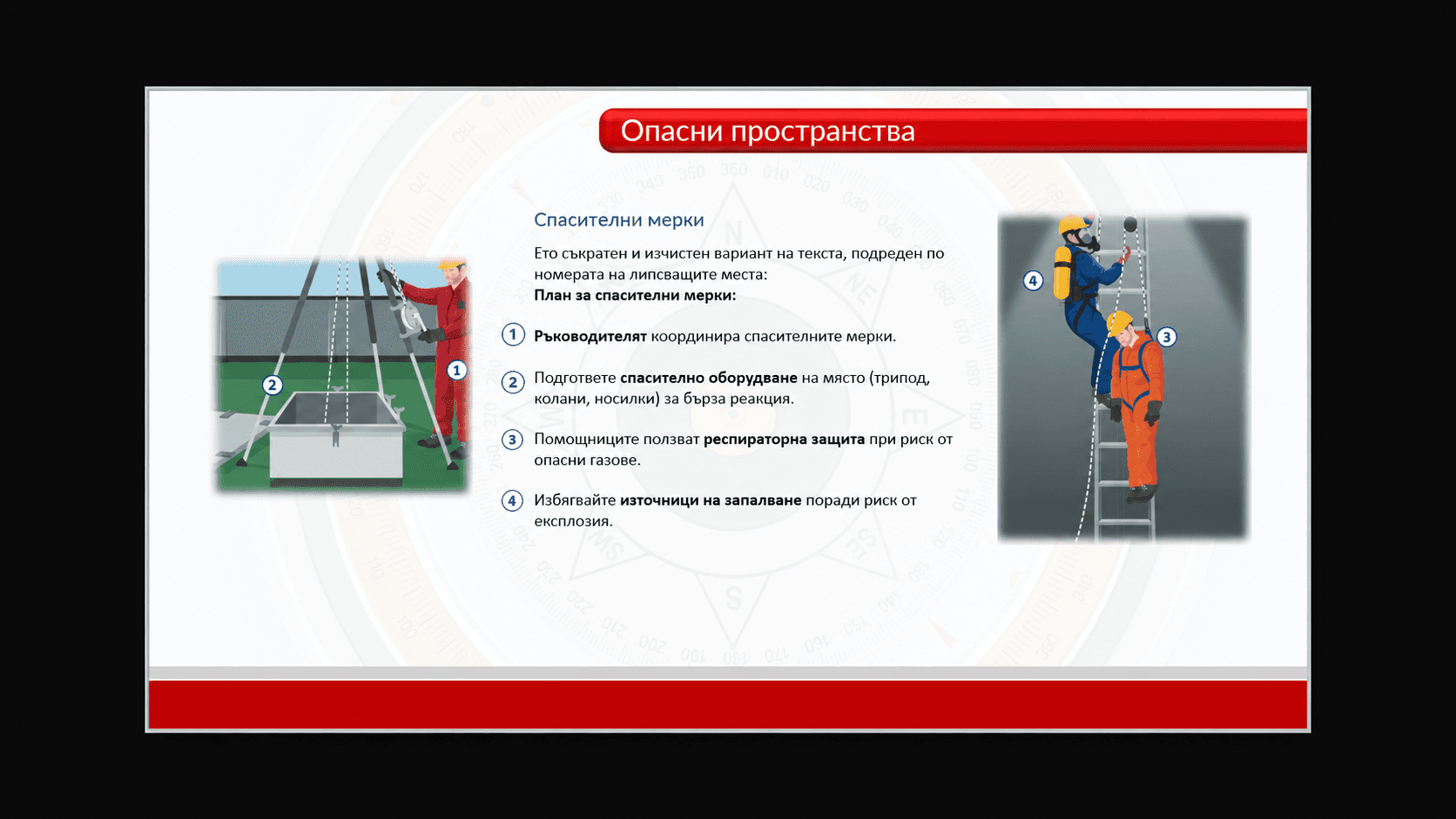
For example, personal protective equipment content was transformed into guided visual learning. Instead of asking learners to read a dense handbook section, the course introduced key equipment through labelled visuals, simplified terminology, and interactive recognition tasks.
The learning flow was designed around a practical sequence:
Explain the safety concept clearly
Show the equipment visually
Let learners explore the parts
Ask learners to practise recognition
Reinforce correct terminology through feedback
This helped learners connect safety terminology with real equipment and situations they would recognise on board.
From Passive Reading to Active Practice
A key part of the transformation was changing passive reference content into active learner input.
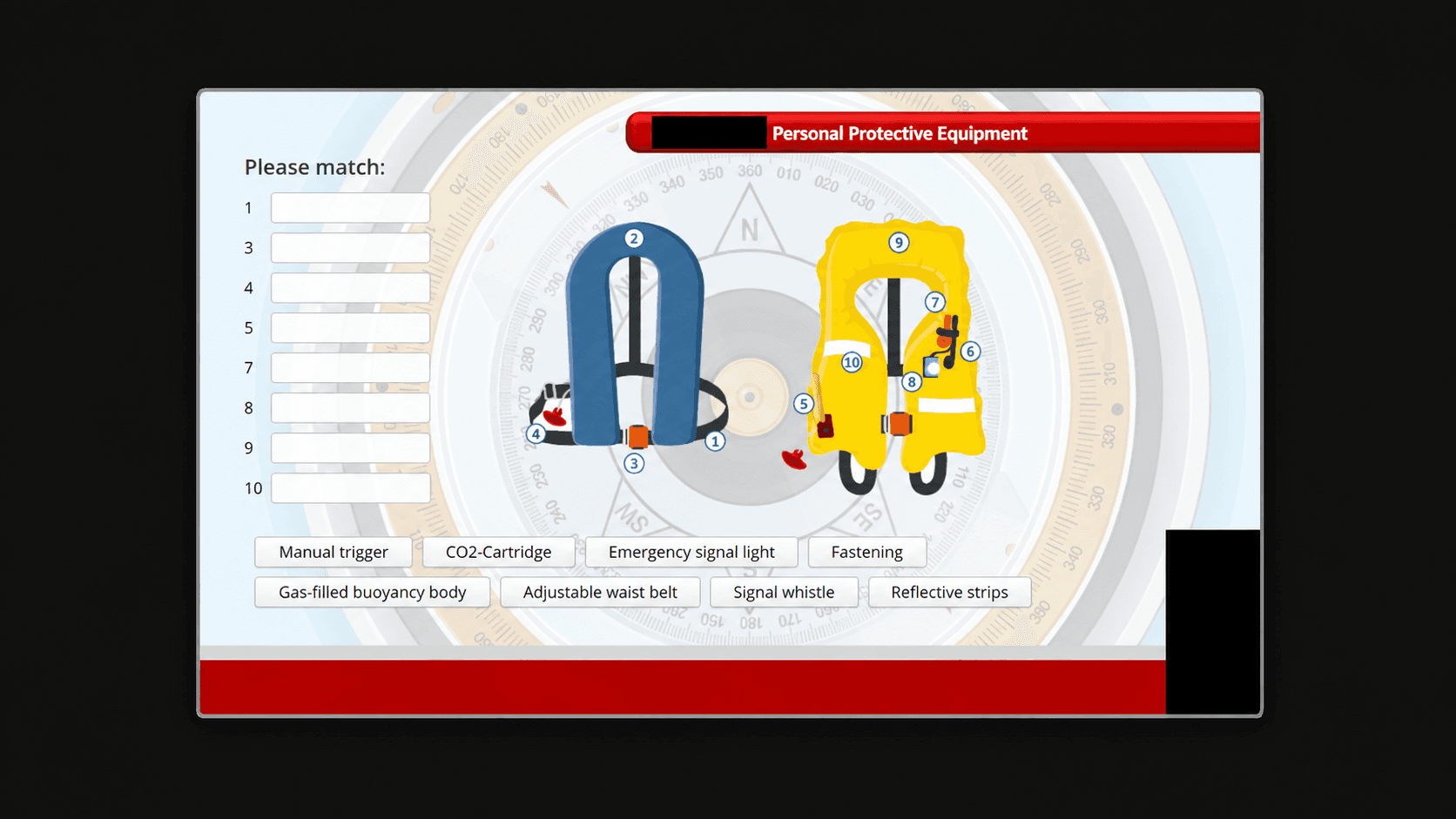
Life jacket and PPE content was converted into drag-and-drop identification exercises. Learners were not only shown the equipment; they had to recognise components, match terminology, and demonstrate understanding.
The interaction design was deliberately simple. The aim was not decorative complexity, but practical recognition, accuracy, and confidence.
This supported:
equipment familiarisation
component-level learning
correct safety terminology
preparation for formal assessment
stronger retention through learner action
Multilingual Course Delivery
The course was designed for international crews, so the same learning structure needed to work across multiple languages.
This required consistent layouts, controlled text length, clear visual hierarchy, and repeatable interface patterns. Translation was not just a language task; it affected screen design, spacing, terminology, audio production, and quality assurance.
Multilingual versions followed the same learning model while adapting the course for different learner groups. This made the training scalable across international crews without losing structure or consistency.
Production and Collaboration
The project involved collaboration between digital learning production, subject matter experts, translators, and LMS delivery.
My work sat across the practical production process: analysing source content, simplifying learner-facing text, building interactive screens, hiring external translators and voiceover artists within our budget, preparing multilingual versions, checking consistency, and supporting LMS-ready delivery.
The wider production workflow included:
source material review
SME input and technical accuracy checks
instructional design decisions
interactive screen development
translation coordination
multilingual QA
LMS publishing and delivery support
This made the project a real digital learning transformation, not just a visual redesign.
Result
Result
The final course formed part of a certified inland shipping safety training programme delivered through the LMS and certified by HEAT Düsseldorf.
The course transformed dense safety reference material into interactive learning, practice activities, and assessment-ready modules for real learners.
Impact highlights:
3,000+ learner completions across Basic Safety / First Aid training
7-language multilingual delivery
part of a wider 120+ course LMS ecosystem for inland shipping training
supported international crew training across safety, first aid, compliance, and technical topics
converted traditional safety material into a working digital learning product
What this demonstrates
Instructional design for safety and compliance training
Digital transformation
Interactive e-learning production
Multilingual course development
SME and translator coordination
Learner-focused simplification of technical content
LMS publishing and delivery support
Assessment-ready learning design
Certification training at scale
Project shots